

Construction Technology · Proptech
How to Keep Zoning and Plan Review in Sync
A permit package can be technically complete and still get slowed down by one avoidable issue: zoning and plan review are reading different versions of the job. When that happens, the set may look...
A permit package can be technically complete and still get slowed down by one avoidable issue: zoning and plan review are reading different versions of the job. When that happens, the set may look finished on paper, but it does not read as one clear project to the reviewer.
That is where delays start. Not because the team failed to submit enough documents, but because the documents do not all tell the same story. One sheet says one thing, another sheet says something else, and the reviewer is left to sort out the conflict. That is rarely a fast process.
Start with the zoning decisions that control the whole set
The cleanest way to avoid this problem is to start with the zoning calls that affect everything else: use, occupancy, setbacks, parking, and any required approvals. Those decisions shape the rest of the permit package. If they are not settled first, the rest of the set can drift out of alignment before the review even begins.
We see the same pattern again and again. A team moves ahead with the site plan, architectural sheets, and cover letter before the zoning direction is fully locked in. Then a change comes in late, and suddenly the package contains mixed signals. At that point, the issue is no longer just zoning. It becomes a coordination problem across the entire submission.
Keep every dependent sheet aligned
Once the zoning calls are set, every sheet that depends on those decisions needs to match. If the use changes, the site plan, architectural sheets, and cover letter all need to say the same thing. If the occupancy changes, that change has to be reflected everywhere it matters. The goal is simple: one project, one version, one clear set of documents.
This is not about adding more paperwork. It is about making sure the paperwork already in the package is consistent. A permit reviewer should not have to compare multiple sheets to figure out which version is correct. If the set is aligned, the review is easier. If it is not, comments are almost guaranteed.
One mismatch is enough to trigger comments
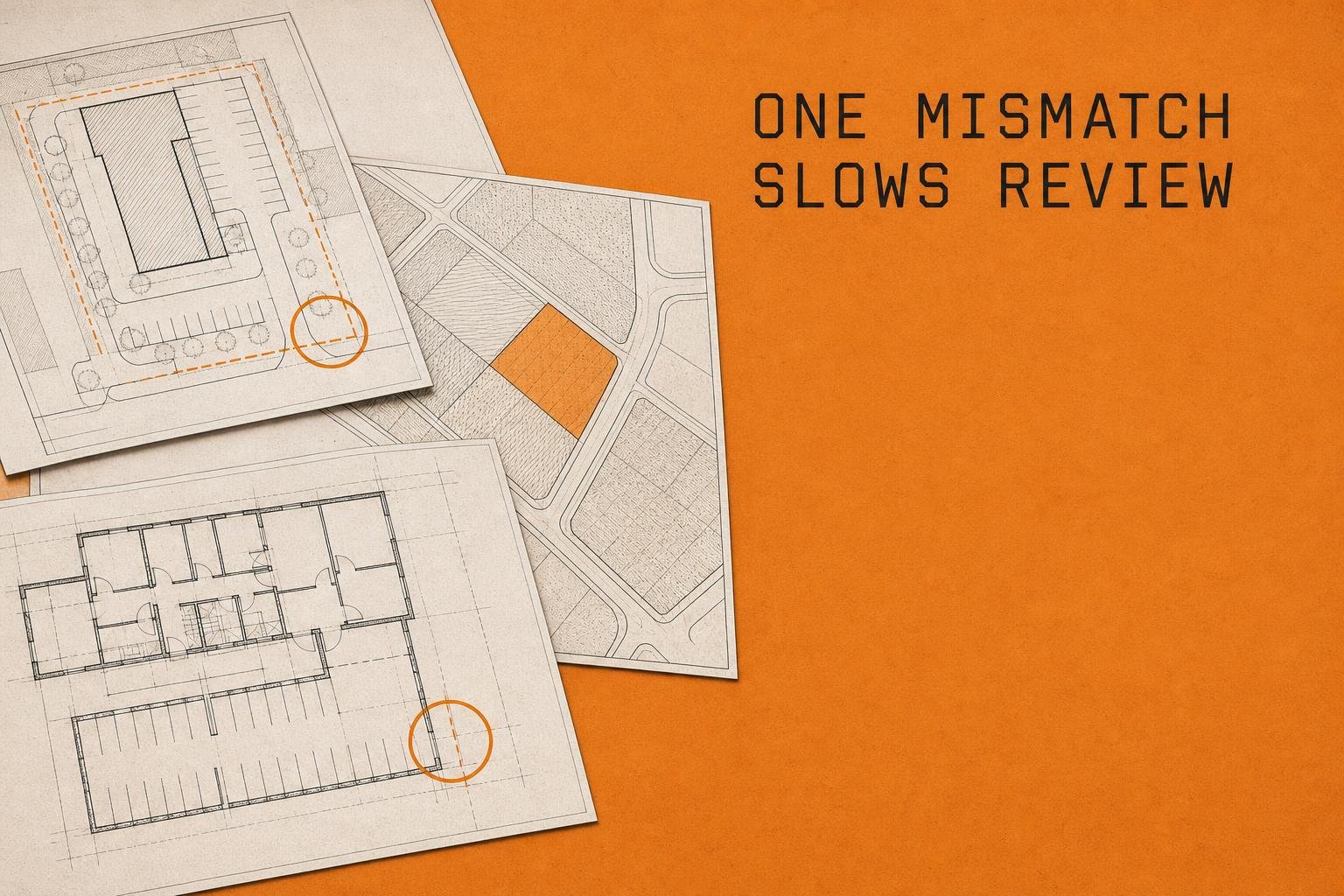
Teams often underestimate how little it takes to stall a review. One mismatch is enough. A note in the cover letter that does not match the site plan. A plan sheet that still reflects the old use. A zoning call that was updated verbally but never carried through to the full set. Reviewers do not need to search for every conflict. They only need to find one.
That is why coordination matters so much in permitting. The package does not need to be perfect in every possible way, but it does need to be internally consistent. When zoning and plan review are reading different versions of the job, the result is usually comments, resubmittals, and lost time.
Build a review set that stays organized
The fix is a clear sequence and a disciplined review set. Start with the zoning decisions. Carry those decisions through every dependent sheet. Keep resubmittals organized so the same changes are reflected everywhere they need to be reflected. That is how teams reduce avoidable back-and-forth and keep the package moving.
At OnlyPermit, we help teams keep zoning decisions, plan sheets, and resubmittals organized in one place so the review set stays aligned. That kind of organization does not just make the package cleaner. It helps prevent the kind of mismatch that slows projects down for no good reason.
If the goal is to keep a job moving, alignment matters more than volume. A permit set that reads clearly is easier to review, easier to approve, and easier to resubmit when changes are required. For teams that want a more controlled process, OnlyPermit helps keep the full set in sync from the start.
When the review package is built around one clear sequence, zoning and plan review stop working against each other. They start reading the same job, and that is where the delays begin to drop off.
For a more organized permitting workflow, visit our website.

